Beyond the Culture of Poverty Again

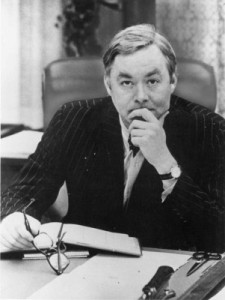
Despite its peachy wealth, the United States has long struggled with poverty. I popular theory for the paradox suggests that a "civilization of poverty" prevents the poor from economic betterment despite social programs designed to aid them. The phrase was originally coined by Oscar Lewis, who believed that children growing up in poor families would learn to adapt to the values and norms that perpetuated poverty. The children would replicate these in their own lives, creating a cycle of intergenerational poverty. It wasn't until Daniel Patrick Moynihan's infamous 1965 study on the blackness American family unit (often dubbed "The Moynihan Report") that the "civilisation of poverty" idea set up off a firestorm. Moynihan described the problems of inner-city blackness families as stemming from a "tangle of pathology," characterized by single-mother families and unemployment. His claims were harshly criticized by many black and civil rights leaders, among others, for explaining blackness poverty as a product of black civilization rather than deeper structural inequalities. Because of this criticism, social scientists have since generally avoided discussing cultural factors when studying poverty, though the "civilization of poverty" rhetoric has remained a popular topic in public and political spheres. The debate almost its relevance has re-emerged with controversial comments past political leader Paul Ryan, as well equally numerous editorials in the Atlantic, The New York Times, and elsewhere.
In this roundtable, we asked three renowned scholars to discuss the lasting significance of the "culture of poverty" rhetoric, and what social scientists could practise to contribute to (or end) this debate.
How has the culture of poverty debate evolved over the years?
Mario Luis Small: There has been some evolution, but it has probably been less in the political sphere than amidst social scientists. Political commentators seem to think of culture as the sum of people's norms and values and of "the civilisation of poverty" equally the norms and values that cause people to enter or remain in poverty. This model is much more than common among commentators on the right than among those on the left, for whom this kind of explanation merely "blames the victims" for their problems. Both positions are quite old, dating at least to 1960s.
Few social scientists use the term "culture of poverty" in a scientific sense. Those who report poverty rarely think well-nigh cultural questions in this way, instead tending to focus on basic structural factors, such as the quality of schools or the availability of jobs, as explanations for poverty. Those who study culture—and these are largely a dissimilar group of scholars altogether—tend to think of culture in far more sophisticated and diverse means than equally the "norms and values" of a group. Few social scientists have attempted to empathize poverty through these alternative conceptions. Many of those who practise focus on questions such as the impact of poverty on civilization or cultural practices, rather than the impact of culture on poverty.
Kaaryn Gustafson: Early writings on the culture of poverty, for example those past Oscar Lewis and Michael Harrington, suggested that the civilization of poverty was an effect, namely an outcome of economical and social exclusion. Those writings suggested that people who faced few economic opportunities in society grew hopeless. In many ways, the early discussions of the civilization of poverty were a call for action, a demand that the U.s., a country that prides itself in economic opportunity, take detect of the many who could non realize those opportunities.
In the mid-1960s, the culture of poverty became associated with African Americans living in concentrated pockets of poverty in urban areas. Daniel Patrick Moynihan'south report, The Negro Family: The Example for National Action (1965), noted high rates of divorce, non-marital childbearing, and welfare utilize amidst black families in urban centers and described these families as exhibiting a "tangle of pathology." During a radio address in 1986, then-President Ronald Reagan quipped that while a War on Poverty had been famously declared in 1964, "y'all could say that poverty won the war." His reason for reaching this conclusion? He noted that a lot of families were using federal anti-poverty programs, or, in his terms, were "dependent" upon federal programs–a not-and then-subtle reference to the civilisation of poverty.
Since and so, the idea that social and economic well-being ought to be measured by how few people are using government programs and not by the well-being of American families themselves has come to guide authorities programs. For example, the success of the federal welfare reforms passed nether President Bill Clinton has been measured by the dramatic decline in the number of families receiving cash benefits. What is forgotten is that the number of American families living in poverty has risen since the welfare reforms.
Why have civilisation of poverty arguments been so persistent?
Small-scale: The notion of a "civilization of poverty" remains role of the conversation for a number of reasons. Some are political. For some people, the idea that people'southward poverty results from their own choices and values seems to explain a lot, regardless of whether that particular thought is really consistent with the available testify. The term itself, "civilization of poverty," is also broad enough that it can be taken by different people to mean unlike things. The term is like shooting fish in a barrel to reinvent from year to yr.
Marker Gould: Since the Civil Rights Move, almost everyone in the United states of america has come to believe that all citizens deserve equal opportunity and most have come to believe that all take equal opportunity. Most of us believe that our values are actually implemented.

If almost Americans believe that African Americans should be treated equally if they are the same as whites, given equal opportunities, and if well-nigh Americans believe that poor African Americans have equal opportunities, the disproportionate failure of African Americans to "succeed" tin only be attributed to traits internal to them and their communities. Logically, it does not matter on what traits we focus, only often it is a "culture of poverty" that is seen as inhibiting success, as inhibiting the disability of poor blacks to accept advantage of the opportunities open up to them. (I limit myself hither to a discussion of African Americans.)
"Culture of poverty" arguments persist given our dominant values and our dominant social science, when they are coupled with the conviction that those values are implemented effectively—that equal opportunity exists. In issue, it is no surprise that "civilization of poverty" arguments recur over and once again; nor is it a surprise that they tend to be manifest in multiple variations, focusing on one or another "cultural" attributes.
In addition, in that location is apparently empirical support for "civilization of poverty" arguments. African Americans do less well than otherwise comparable whites on many measures of operation; poor people do less well, by definition, economically, just they as well do less well educationally and are incarcerated at higher rates (whatever their bodily criminal activeness). Recognizing this and thinking inside the dominant values in our society, many Americans think that they are "facing facts" when invoking "culture of poverty" arguments. [T]he aforementioned thing is true of many social scientists who written report poverty. Social scientists are, however, less likely to believe that equal opportunity is in place, which immunizes many of them from falling into this trap.
Gustafson: The entreatment of the "culture of poverty" is that it offers a clear explanation for poverty, an explanation that removes both private bureau and commonage responsibleness from the equation. This simplistic account of poverty—one that suggests that certain populations have developed settled social and economic sub-cultures outside the mainstream—blinds us from the historical contingencies and the political decisions that have led to a high rate of poverty relative to most wealthy nations. The current agreement of the culture of poverty suggests that poverty is intractable and dismisses that idea that policy changes tin can lower the rate of poverty in the United states or address the concentration of poverty in certain populations such as African Americans, Latinos, Native Americans and recent Asian immigrants; the disabled; and the parents of young children.
How has the idea of a culture of poverty afflicted politics and society?
Gould: The consequences of "culture of poverty" arguments take been disastrous. These arguments effect in policies that seek to change blacks. If there is equal opportunity, their "culture of poverty," in its various guises, means that African Americans are unable to accept advantage of that opportunity.
Such arguments miss the nature and consequences of contemporary discrimination. While there is plenty of overt discrimination, disparate treatment, the more of import form of discrimination in the The states today, is disparate impact. This is where ostensibly neutral structures and organizations, organizations that care for blacks and whites every bit if they were the aforementioned, generate adverse consequences for blacks.The consequences of "civilisation of poverty" arguments take been disastrous. They upshot in policies that seek to change blacks rather than modify organizational constraints and persistent discrimination.
Think near the discussions of "acting white." If African Americans who act blackness are expected to perform poorly, this becomes a self-fulfilling prophecy, and (most) simply those blacks who "deed white" perform well. When blacks and whites perform dissimilar cultures, deed out dissimilar cultural identities, in that location is no reason to think that the differences are intrinsically relevant to educational performance; however, they may well affect performance when taken in conjunction with how students who perform these cultural differences are regarded and dealt with in organizations. African Americans may have a unlike subculture than whites, but if they perform less well than whites, it is not because of that subculture, but considering of how they are processed in organizations because of it.

This discussion is, of grade, too simple. Information technology ignores the structurally-dissimilar positions blacks and whites occupy in American society, but possibly it suggests that just because black civilisation correlates with "deficient functioning" does not mean that black culture is deficient. We have learned to encounter black culture equally scarce, as something we ought non to value, because of "culture of poverty" arguments, because our commonsense understanding precludes our comprehending that the problem is not intrinsic to the culture, only to the way bearers of that civilisation are constrained organizationally.
Gustafson:The pathologizing of the poor, the popular belief that poverty is a result of individuals' failings to practise personal responsibility, and the conventionalities that regime programs are by nature wasteful and breed dependency remain widespread and influential today. This perpetuates the illusion that those people—the poor people who lack a real work ethic—are poor for a reason, but that others, particularly hardworking members of the middle grade, are invulnerable to economical hazard so long equally they are working hard enough. The persistence of the civilization of poverty theory also distracts the public and lawmakers from celebrating the policy decisions that have been successful in ameliorating poverty. As a result, popular and governmental commitments to fighting poverty are slight.
Does talk about the US as a post-racial gild influence the rhetoric around the culture of poverty?
Gould: Before the Civil Rights Movement, when discrimination against African-Americans was overt, liberal-minded people could explain differential operation between blacks and whites every bit due to overt discrimination.
In post-Civil Rights Motility America, which some erroneously see as a post-racial society, the logic of this argument changes fundamentally. In the absence of overt bigotry… liberals either have to think social structurally nearly the nature of discrimination, or they autumn into "culture of poverty" arguments. Likewise, social scientists, fifty-fifty when claiming to eschew "culture of poverty" arguments, fall into them.
In that location is a paradox here. Participants in the Civil Rights Movement fought for the inclusion of African Americans, and derivatively others (within the American Creed), for their inclusion every bit total citizens. The success of the Movement, the inclusion of African Americans, including the poor, within the egalitarian values dominant in American club, and given the reality of African Americans performing less well than whites in many areas, has resulted in the construction of a New Racism. This New Racism does not result primarily in invidious biological distinctions between African Americans and whites as explanations for the "facts," but instead in the characterization of African Americans every bit performing less well than whites (including in their concentrated poverty) considering of their "cultural attributes."
What is missing from the electric current public discourse about the culture of poverty? What can sociologists contribute to the discussion of poverty policies?
Gustafson: Social scientists concerned about social inequality should plough their attention to poverty, especially child poverty. Scholars tin play a role in informing students and the public of the very fact that child poverty is widespread, tin have opportunities to study the long-term effects of child poverty on families and social club, and tin use their skills to study the effectiveness of item policies in reducing kid poverty. More piece of work needs to be done in tracing and examining the successes of government led-anti-poverty efforts, from the drop in poverty amid elderly Americans to the documented, long-term furnishings of Caput Get-go programs.
We tend to focus on failures and ignore successes. Sociologists great on historical and comparative work might promote awareness that the United states is an outlier and that policies common in other countries—universal wellness care, paid family go out for workers with young children, and universal kid allowances—are effective in reducing poverty there.We tend to focus on failures and ignore successes. Sociologists might promote sensation that the U.s.a. is an outlier, that policies common in other countries—universal health care, paid family unit leave for workers with young children, and universal child allowances—are effective in reducing poverty.
Finally, qualitative sociologists can serve an important function in carefully and critically documenting the experiences of the poor, particularly because in that location is fiddling in the pop media about the experiences of the poor and poor people have piffling political access in a country where money is oral communication. While virtually Americans are overexposed to the lifestyles of the rich and famous, we rarely hear nearly how poverty affects daily lives and how information technology limits choices and life chances.
Small: I think 3 things are missing:
First, a broader understanding of the many means that anthropologists and others who study civilization (but not poverty) take conceptualized culture, its impact on behavior, its response to intervention, and its limitations every bit an explanatory factor.
2d, better information.
Third, more dispassionate analysis.
The one advantage of the new generation of scholars working on these questions is that they were not function of the highly begrudging debate over culture during the 1960s and 1970s. The argue was so contentious and the rhetoric so heated that it has been difficult to address even bones empirical questions from a scientific perspective. [Now] there is space for a new round of articulate, disinterested research that tin can illuminate much more than the old models accept found.A lot of people assume that social scientists who examine the relationship betwixt civilisation and poverty must have a item political agenda. This shows how far we need to go.
For case, a lot of people assume that social scientists who examine the human relationship between culture and poverty must have a particular political calendar. Some fifty-fifty believe that studying culture necessarily implies a particular political posture. Yet notice that entire academic disciplines—most notably, anthropology—are fundamentally devoted to the study of civilisation. The fact that anyone believes that studying civilisation means rehashing that old idea shows how far we need to go.
Gould:At that place are a number of conceptual distinctions we need to make before we can codify constructive policies. So far, I have been using the term "culture" as if we knew what information technology meant. In reality, "civilisation of poverty" arguments are a mishmash that misfile much more than they illuminate.
Implicit in many "culture of poverty" discussions is a notion of social values. Social values regulate what is desirable; they constitute obligations. If folks do not observe a practiced job desirable, if they do not feel the obligation to work, they will non seek out jobs when the opportunity to exercise and then arises. If students practice not value education, do non experience an obligation to do well in school, they will not orient themselves to educational opportunities. In dissimilarity to these contentions, there is a lot of evidence that inner-urban center blacks share the dominant values of USA society, including the positive evaluation of difficult work and a delivery to education. If this is correct, we would expect them, for case, to seek work when it is bachelor, and they do so.Implicit in many "culture of poverty" discussions is a notion of social values. Social values regulate what is desirable; they constitute obligations. There is a lot of evidence that inner-metropolis blacks share the dominant values of difficult work and a commitment to education.
The notion of an "oppositional civilization" is important here. Ofttimes, an oppositional culture is understood to inhibit intrinsically educational or occupational success; it may be seen, for example, as devaluing educational success. Information technology is treated equally a "culture of poverty." If, instead, black civilization inhibits success non because of its inherent traits (it is not the case that poor blacks cheapen educational success), but because of the manner a blackness man wearing baggy jeans is treated, the question becomes why many African-Americans, unlike some immigrant groups, are unwilling to requite upwards their civilisation and their cultural performances, unwilling to "human activity white." The answer, I think, is because for African-Americans, this cultural identity and the performances that actualize it (in wearing apparel, music, language, speech act and style) are crucial; they represent, if in a form more fractured than previously, the commonage solidarity that has enabled African-Americans to endure and to excel culturally. This is an oppositional culture, merely only in the sense that African-Americans do non want to sacrifice it. As an oppositional culture, it is fully compatible with the values dominant in United States guild.
Thus, while the black subculture is not a "civilization of poverty"—it does non inhibit success due to its inherent attributes—information technology may inhibit success, due to how people who share it are considered in the larger guild. This distinction, between a "civilization" that inhibits success considering of qualities inherent to it (e.g., for instance, non valuing hard work), and a culture that inhibits success, non because of its inherent qualities, but because of the (racist) orientation of a dominant (and sometimes others in the subordinate) group towards people within that culture, is crucial, but too oftentimes missing from discussions of culture and poverty.
If this analysis makes sense, our business organization should be to construct opportunities for the inner-urban center poor to succeed, ladders of achievement that facilitate their success in school, that make it possible for them to find jobs that will support their families in nobility, and to reconstruct organizations in a way that makes information technology possible for African-Americans to share in organizational governance and so that African-American cultural identities might be actualized to the benefit of all Americans.
Source: https://thesocietypages.org/roundtables/culture-of-poverty/
0 Response to "Beyond the Culture of Poverty Again"
Post a Comment